Hummingbird Feeder Cameras
Kepact Glass Bottle Hummingbird Feeder Camera
Glass rather than plastic, an ant moat included and both voice assistants supported - and still no answer to the only question that decides hummingbird footage.
How this page is funded. Buying through a link here earns us a commission at no extra cost to you. It does not change what we recommend or the order we recommend it in, and we have not handled any of these products ourselves - see how we pick and the full disclosure.
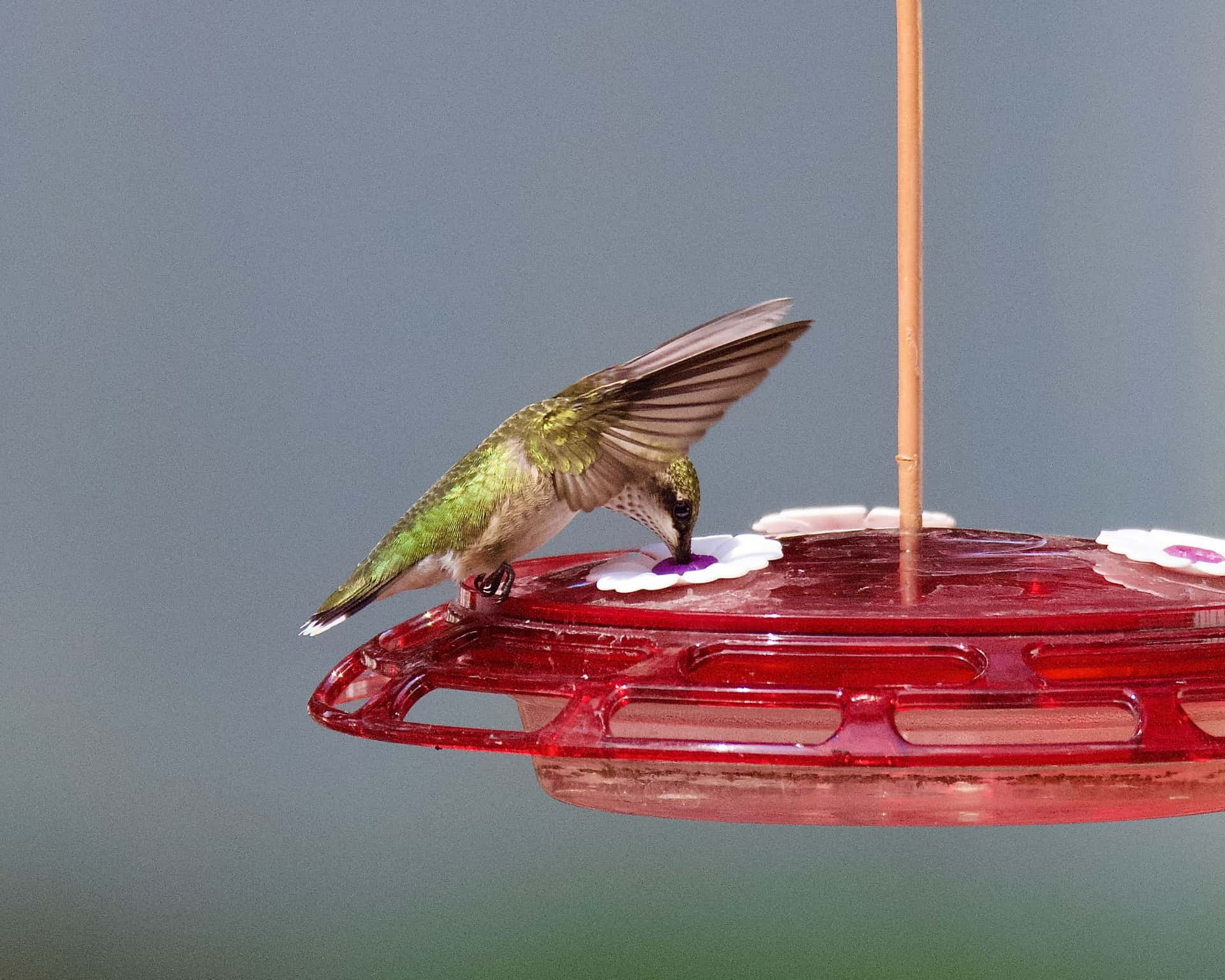
Every other nectar camera on this site holds its sugar water in plastic. This one uses a glass bottle, and that single material choice is a bigger deal on a hummingbird feeder than it would be on almost any other product.
Whether it justifies the price depends on how seriously you take the maintenance, which is the part of hummingbird feeding that nobody enjoys and everybody underestimates.
Why glass is the headline
A nectar reservoir is emptied, scrubbed and refilled every two to three days through the warm months. That is not a suggestion - sugar water ferments, and in hot weather it can go bad in a day or two. The cleaning schedule is set by the chemistry, not by your preference.
Plastic does not survive that cycle well. It clouds, it scratches, and scratches hold residue that a brush cannot reach - which means the surface gets progressively harder to clean at exactly the rate you are cleaning it. A plastic reservoir after two seasons of proper maintenance looks its age.
Glass does not cloud and does not scratch from a bottle brush. It is the correct material for a container that will be scrubbed two hundred times, and the fact that only one maker in this category has used it says more about manufacturing cost than about design.
The nectar and cleaning guide has the full schedule and the four-to-one recipe, and it is worth reading before you buy any nectar feeder, camera or not.
The ant moat, which is not a nicety
Published on the listing, and it should be standard on every nectar feeder sold. Ants find sugar water within days of it appearing, and once a trail is established the feeder is effectively theirs - hummingbirds will not fight a column of ants for a port.
A moat is a small water-filled cup above the feeder that ants will not cross. It is a five-dollar part that most makers leave you to discover and buy separately, and having it included is a genuine convenience rather than a marketing line.
The leak-proof claim alongside it is harder to evaluate and worth a note of caution: nectar feeders leak when they warm up, because the air inside expands and pushes liquid out of the ports. That is physics rather than a manufacturing defect, and no design fully escapes it in direct sun.
Quick picks
Ranked on published specifications and what each one costs to own. Every pick names the buyer it is wrong for.
| # | Product | Best for | Price |
|---|---|---|---|
| 1 |  Kepact Glass Bottle Hummingbird Feeder Camera 2.5K and 5MP on a glass-bottle feeder with a published ant moat and leak-proof claim - the only nectar camera here that is not entirely plastic. | A glass reservoir instead of the usual plastic | |
| 2 |  Birdfy Hummee Birdfy's dedicated nectar camera, built as a two-in-one feeder to pull more birds into one frame. Very little about it is published beyond that. | Two feeding stations under one camera | |
| 3 |  Humbirdy 4K Hummingbird Feeder Camera The only 4K hummingbird feeder we found, with a no-subscription claim in the title and almost nothing else published. | The highest published resolution on a nectar feeder |
1. A glass reservoir instead of the usual plastic
Kepact Glass Bottle Hummingbird Feeder Camera
2.5K and 5MP on a glass-bottle feeder with a published ant moat and leak-proof claim - the only nectar camera here that is not entirely plastic.
Glass is the argument and it is a better one than it sounds. A nectar reservoir gets emptied, scrubbed and refilled every two to three days through summer, and plastic does not survive that cycle well - it clouds, it scratches, and scratches hold sugar residue that feeds mold.
The published ant moat matters for the same practical reason. Ants find sugar water within days, and a feeder that arrives with the defense built in is one fewer accessory and one fewer failure point.
What is not published is the only thing that decides hummingbird image quality: frame rate. A wing beating fifty times a second is a blur at any resolution, and 2.5K of blur is not better than 1080p of blur.
What it does well
- Glass reservoir rather than plastic - genuinely better through a cleaning season
- Ant moat and leak protection both published
- Publishes voice-assistant support for both major platforms
What it does not
- No published frame rate, which is the specification that matters most on a hummingbird
- No published Wi-Fi band or sensor size
- No published nectar capacity
- Glass is heavier and breakable where plastic is neither
Skip this: if you hang your feeder somewhere it gets knocked. Glass is the feature and it is also the failure mode.
2. Two feeding stations under one camera
Birdfy Hummee
Birdfy's dedicated nectar camera, built as a two-in-one feeder to pull more birds into one frame. Very little about it is published beyond that.
The Hummee is the only product in this hub designed as a nectar camera from the start rather than a seed feeder adapted to nectar, and the two-in-one feeder body is the reason to consider it: more feeding positions in one frame means more of the visits land where the lens is pointed.
It is also, on published material, the least documented pick here. Birdfy states the feeder design and the auto-capture behavior and then stops - no resolution, no nectar capacity, no battery figure, no Wi-Fi band. On a site that ranks on what makers publish, that is itself the finding.
Whatever you buy, the maintenance is the same and it is not optional: nectar needs replacing every two to three days in hot weather regardless of how full the reservoir is. The nectar and cleaning guide has the routine.
| Feeder design | Two-in-one feeder, described as attracting more hummingbirdsSource: Birdfy Hummee - manufacturer listing on Amazon, retrieved 1 September 2026 |
|---|---|
| Capture | Auto capture of bird videos, framed for close-up viewingSource: Birdfy Hummee - manufacturer listing on Amazon, retrieved 1 September 2026 |
| Video resolution | Not publishedThe current listing does not state a capture resolution. |
| Nectar capacity | Not published |
| Battery capacity | Not published |
| Wi-Fi band | Not published |
| Species identified | Not published |
What it does well
- Purpose-built as a hummingbird camera rather than an adapted seed feeder
- Two-in-one feeder body puts more feeding positions in one frame
- From the maker with the longest camera-app track record in the category
What it does not
- No published capture resolution - unusual on a product sold for its footage
- No published nectar capacity, battery capacity or Wi-Fi band
- Identification sits behind Birdfy's optional plan, whose price is not on the listing
Skip this: if you want the specification sheet filled in before you spend. Birdbuddy publishes a sensor size and this publishes almost nothing, which is what the head-to-head comes down to.
3. The highest published resolution on a nectar feeder
Humbirdy 4K Hummingbird Feeder Camera
The only 4K hummingbird feeder we found, with a no-subscription claim in the title and almost nothing else published.
4K on a nectar feeder is a first, and it is worth being clear about what it does and does not buy. More pixels help with a perched hummingbird at a port. They do nothing for a hovering one, because that is a shutter-speed problem and no resolution figure addresses it.
The no-subscription claim is the more valuable half of this listing. Nectar cameras follow the same billing patterns as seed cameras, and having the question closed in the title is worth more over three years than the resolution above it.
Three published claims in total. The solar roof on a nectar feeder also deserves a mention, because hummingbird feeders usually hang on shaded porches, where a panel does the least work.
| Video resolution | 4KThe highest published figure on any nectar feeder camera we cover.Source: Humbirdy 4K Hummingbird Feeder - manufacturer listing on Amazon, retrieved 1 September 2026 |
|---|---|
| Subscription | None claimedSource: Humbirdy 4K Hummingbird Feeder - manufacturer listing on Amazon, retrieved 1 September 2026 |
| Power | SolarSource: Humbirdy 4K Hummingbird Feeder - manufacturer listing on Amazon, retrieved 1 September 2026 |
| Frame rate | Not publishedOn a hummingbird this decides the picture, and 4K without it is a bigger blurred wing. |
| Wi-Fi band | Not published |
| Sensor size | Not published |
| Nectar capacity | Not published |
| Ant defense | Not published |
| Storage | Not published |
| Ingress rating | Not published |
What it does well
- Only 4K nectar feeder we could find
- No-subscription claim made explicitly
- Solar
What it does not
- No published frame rate, so the 4K claim cannot be assessed for the subject it will photograph
- No published ant moat on a sugar-water feeder
- No published band, sensor, capacity or storage
- Solar roof on a product that usually hangs in shade
Skip this: if you want hovering flight frozen rather than smeared. No nectar camera publishes a frame rate, so nobody can promise you that, and the extra pixels here are not the answer.
What is published on the camera
2.5K video and 5MP stills, solar power, instant alerts, AI recognition, and compatibility with both Alexa and Google Assistant. That is a fuller camera description than most nectar feeders offer, and the voice-assistant support is published by almost nothing else in this category.
Take the assistant claim at face value and no further. Works with Alexa covers a wide range in practice - casting a live view to a smart display at one end, an announcement when motion fires at the other - and the listing does not say which. It is a claim that some integration exists.
The figure nobody publishes
This is the single most important thing to understand before buying any hummingbird camera, and it applies across the whole category rather than to this product specifically. Every listing advertises resolution. None of them advertises the specification that governs whether a hovering bird looks like a bird.
What you can reasonably expect is good footage of perched hummingbirds at the port, which is most of what they do at a feeder anyway - they perch to drink far more often than people expect. Hovering flight is the shot nobody can promise you.
What else is missing
No Wi-Fi band, which in this category has consistently meant 2.4GHz only and is the top cause of returns. No sensor size, so the 2.5K figure has no context. No nectar capacity, which decides how often the cleaning cycle comes round. No subscription price.
The nectar capacity gap is the one that interacts with the glass advantage in an awkward way. A larger reservoir means fewer refills but more waste, because you should not be leaving nectar out long enough to use up a big bottle in summer. Without a published figure you cannot tell whether this feeder is sized sensibly for the cleaning schedule it requires.
Solar, on a porch
Solar is claimed, and on a nectar feeder that deserves more skepticism than usual. Hummingbird feeders are conventionally hung on shaded porches and under eaves, partly because that is where people sit and partly because shade slows the nectar going off.
A solar panel in that position does very little. Treat it as a top-up rather than a power supply, and expect to bring the unit in to charge - which, given you are handling the feeder every two days anyway, is less of an imposition here than it is on a seed feeder.
Who should buy it
Somebody who intends to actually maintain a hummingbird feeder properly, for several seasons. That is the buyer the glass reservoir is for, and over three or four years it is a material advantage over plastic that no specification sheet will capture.
Also somebody who wants the ant moat settled and the voice-assistant integration available, both of which are published here and on very little else.
Who should not
Anybody hanging a feeder somewhere it gets knocked - by a screen door, a pet or a child. Glass is the feature and it is also the failure mode, and a plastic reservoir survives being dropped in a way this will not.
And anybody buying specifically to film hovering flight. No nectar camera publishes a frame rate, so nobody can sell you that outcome honestly, and a listing advertising a higher resolution is not offering a solution to it. Are smart hummingbird feeders worth it is the broader version of that question.
The verdict
The right material on the part of the product that wears out, with a camera specification that is fuller than the category average and still silent on the one figure that matters most for the subject.
If you are going to keep a hummingbird feeder properly, the glass is worth paying for. If you are not going to keep it properly, do not buy a hummingbird feeder at all - an unmaintained nectar feeder is worse for the birds than no feeder. The hummingbird roundup ranks the alternatives, and placement decides more about your footage than any of these specifications do.
Questions people actually ask
Is a glass hummingbird feeder better than plastic?
For a feeder that gets scrubbed every two to three days, yes. Plastic clouds and scratches, and scratches hold residue a brush cannot reach. Glass does neither, but it breaks.
Will it film hummingbirds hovering?
Nobody can promise that. No nectar camera in this category publishes a frame rate or shutter speed, and those govern whether a wing beating fifty times a second is a shape or a smear. Perched birds at the port will film well.
Does it come with an ant moat?
Yes, published on the listing. That is worth more than it sounds - ants find sugar water within days and hummingbirds will not compete with an established trail.
Does it really work with Alexa?
The listing claims compatibility with Alexa and Google Assistant without describing what the integration does. Treat it as a claim that something exists rather than as a specification.
What Wi-Fi band does it need?
Not published. In this category that has consistently meant 2.4GHz only, so plan on splitting your network bands before setup.
How much nectar does it hold?
Not published, which is a real gap - capacity decides how often the two-to-three-day cleaning cycle comes round, and an oversized reservoir means waste rather than convenience.