Smart Bird Feeder Cameras
Smart Bird Feeder Cameras
The main event. Seed feeders with a camera in them, ranked on published specifications, the Wi-Fi band they actually need, and what they cost once the subscription is counted.
How this page is funded. Buying through a link here earns us a commission at no extra cost to you. It does not change what we recommend or the order we recommend it in, and we have not handled any of these products ourselves - see how we pick and the full disclosure.
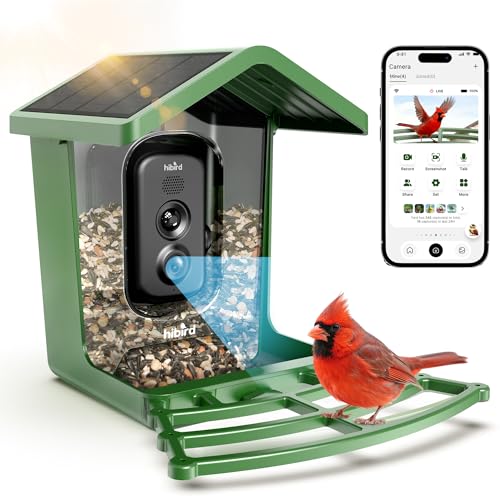
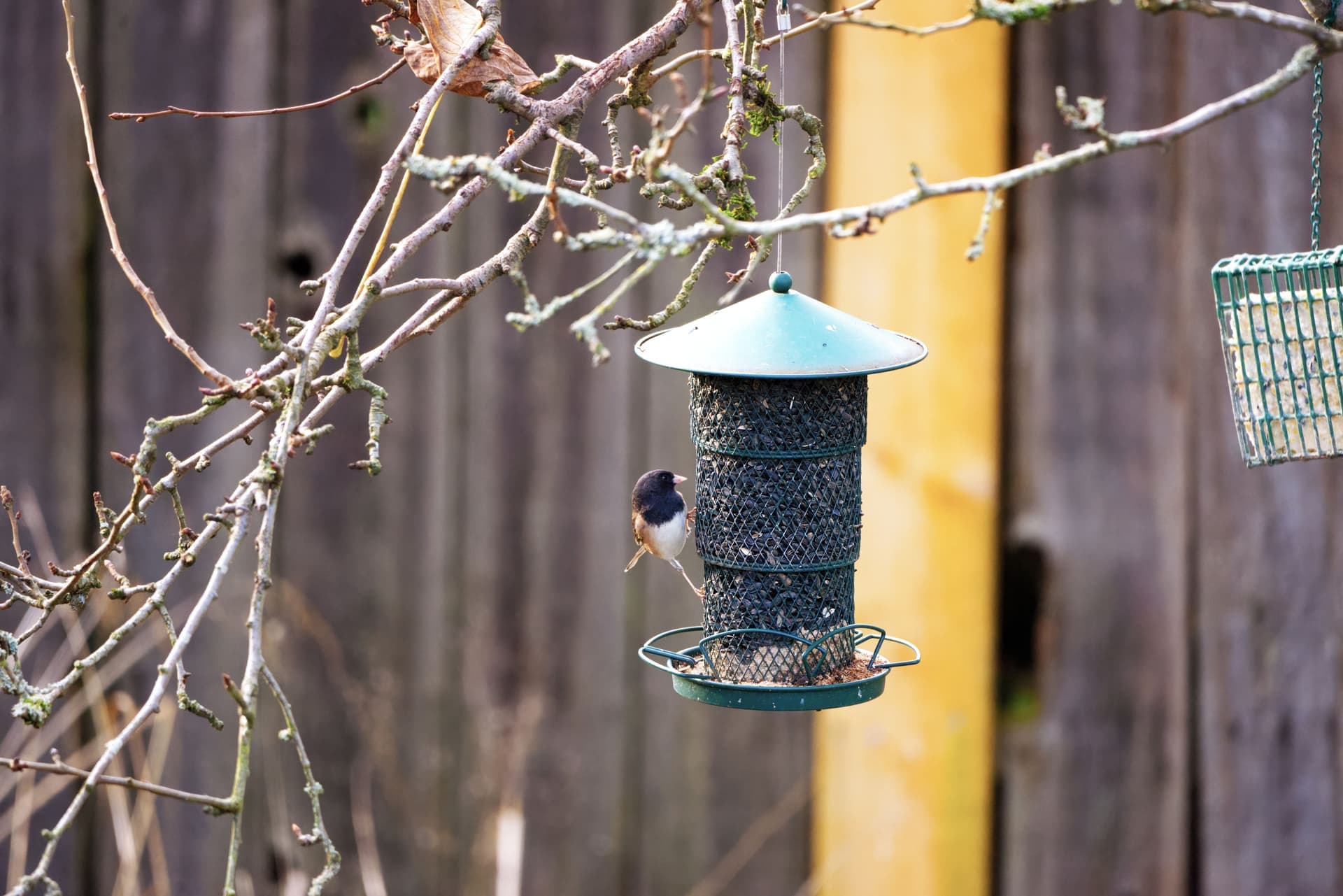
A smart bird feeder is an ordinary seed feeder with a camera pointed at the perch, a battery behind it, and an app that pushes you a clip when something lands. That is the entire product. Everything that separates one from another sits in four places: how good the picture is, how it gets power, what the app costs you after the first year, and whether the thing will join your Wi-Fi at all.
Those four are not weighted equally, and the marketing gets the order exactly backwards. Every listing in this category leads with a species-identification number - 6,000 species, 10,000 species - and that number is the least useful thing on the page. The two that decide whether you end up happy are the Wi-Fi band and the subscription, and neither one is usually printed where you can find it before you buy.
Start here
If you want one answer and no homework, read the main roundup. It ranks every feeder camera we hold published specifications for, names the buyer each one is wrong for, and puts a live price next to each pick.
If you already have an objection, go straight to it. The three that come up most, in order: the subscription - covered in the no-subscription roundup and priced out over three years in the subscription cost guide. Power - covered in the solar roundup. Squirrels - covered in the squirrel-proof roundup.
Quick picks
Ranked on published specifications and what each one costs to own. Every pick names the buyer it is wrong for.
| # | Product | Best for | Price |
|---|---|---|---|
| 1 |  Birdbuddy Pro Solar The largest published sensor in the category and the only maker that declines to advertise a species count - both of which point the same way. | The best pictures, if you can live with the app | |
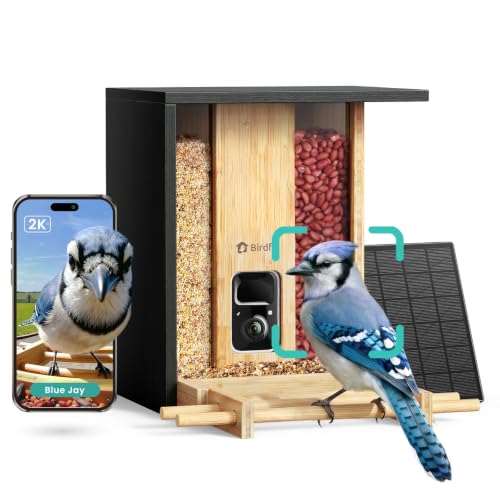
| 2 |  Birdfy 2 Pro Solar Two lenses, a stated 9,000mAh battery and a stated 3W panel. Birdfy publishes numbers other makers hide, and the numbers are good. | The most published specification of anything here | |
| 3 |  Kiwibit Smart Bird Feeder (4K) 4K, 8MP, a stated 5,200mAh cell and a stated 3W panel, with an IP65 rating and a real temperature range. Then it claims 10,000+ species. | The most published specification per dollar | |
| 4 |  FeatherSnap Scout Dual 1L bins let you run sunflower and nyjer at once, which changes what turns up. FeatherSnap is also the only maker in this roundup that publishes its own price. | Two seed types, and the only published retail price here |
1. The best pictures, if you can live with the app
Birdbuddy Pro Solar
The largest published sensor in the category and the only maker that declines to advertise a species count - both of which point the same way.
A 1/2.7" sensor is a real, checkable number, and it is bigger than anything else in this category will admit to. Sensor area is what governs how a photo looks when a bird lands at dusk, which is when most feeder traffic actually happens. Nobody else publishes the figure, so nobody else can be compared to it.
The thing worth noticing is what is missing. Every rival leads with an AI number - 6,000 species, 10,000 species. Birdbuddy prints none. A maker that does not put a number on its recognition claim is a maker with nothing to walk back, and after you read the species-claim audit that reads as confidence rather than as a gap.
The Wi-Fi position is the one to check before you buy. Birdbuddy's own support documentation says the original camera module requires 2.4GHz and does not work on 5GHz. If your router broadcasts one merged network name, that is the setup that fails - and the fix takes ten minutes once you know about it. It is covered in the Wi-Fi requirements guide.
| Video resolution | 2KSource: Birdbuddy Pro Solar - manufacturer listing on Amazon, retrieved 1 September 2026 |
|---|---|
| Photo resolution | 5MPSource: Birdbuddy Pro Solar - manufacturer listing on Amazon, retrieved 1 September 2026 |
| Sensor size | 1/2.7"The only sensor dimension published by any maker in this roundup.Source: Birdbuddy Pro Solar - manufacturer listing on Amazon, retrieved 1 September 2026 |
| Dynamic range | HDRSource: Birdbuddy Pro Solar - manufacturer listing on Amazon, retrieved 1 September 2026 |
| Wi-Fi band | 2.4GHz for the original camera module; the Birdbuddy 2 module adds 5GHzBirdbuddy's own support pages state the original module does not work on 5GHz.Source: Birdbuddy support: Connectivity and Wi-Fi requirements |
| Solar | Detachable solar roof, rotates 180 degreesSource: Birdbuddy Pro Solar - manufacturer listing on Amazon, retrieved 1 September 2026 |
| Battery capacity | Not publishedNo mAh figure appears on the listing or the support site. |
| Species identified | Not publishedBirdbuddy publishes no species count anywhere we could find. See the AI claims audit. |
| Subscription price | Not publishedNot stated on the listing, and the plan page did not serve us a price. |
What it does well
- Published 1/2.7" sensor with HDR - the only sensor dimension anyone in the category states
- Solar roof detaches and rotates, so the panel can face the sun even when the feeder cannot
- Makes no species-count claim, which is the honest position given the arithmetic
- The largest accessory ecosystem in the category, including perch extenders and nutrition sets
What it does not
- Battery capacity is not published, so runtime cannot be estimated from first principles
- The original camera module is 2.4GHz-only per Birdbuddy's own support pages
- Subscription pricing is not stated on the listing and was not retrievable from the plan page
Skip this: if you want every feature unlocked with no ongoing decision to make. Birdbuddy's premium tier exists, its price is not published where a buyer can find it, and buying into an unpriced subscription is exactly the trap the three-year cost guide was written about.
2. The most published specification of anything here
Birdfy 2 Pro Solar
Two lenses, a stated 9,000mAh battery and a stated 3W panel. Birdfy publishes numbers other makers hide, and the numbers are good.
A 9,000mAh cell paired with a 3W panel is the most generous published power budget in the category, and it is the reason this model turns up in so many yards that get only morning sun. It is also, notably, a number: Birdfy states it, most rivals do not, and a stated number is one you can hold them to.
The dual-lens arrangement is a genuine design decision rather than a spec-sheet flourish. One lens frames the whole feeder, the other pushes in on the perch. What that buys you is a photo where the bird fills the frame without the wide shot becoming useless - which is precisely the complaint people have about single-lens feeders.
The species claim is where to be careful. 6,000+ is a claim by the maker. There are 11,227 bird species on Earth by the current IOC list, and 1,161 in the whole ABA Area. What a 6,000-species model can honestly do in a North American backyard is worked through in the AI claims audit.
Operating range is stated at 14F to 113F. If you live somewhere that spends February below 14F, that is a published limit, not a rumor, and it should decide your purchase.
| Camera system | Dual lens: 1080P wide + 2K auto-tracking close-up, with split viewSource: Birdfy 2 Pro Solar - manufacturer listing on Amazon, retrieved 1 September 2026 |
|---|---|
| Battery capacity | 9,000mAhThe largest published capacity of any feeder on this site, and one of only four published at all.Source: Birdfy 2 Pro Solar - manufacturer listing on Amazon, retrieved 1 September 2026 |
| Solar panel | 3WSource: Birdfy 2 Pro Solar - manufacturer listing on Amazon, retrieved 1 September 2026 |
| Species identified | 6,000+ claimedA claim by the maker, not a verified figure. See the audit.Source: Birdfy 2 - manufacturer listing on Amazon, retrieved 1 September 2026 |
| Operating range | 14F to 113FSource: Birdfy 2 - manufacturer listing on Amazon, retrieved 1 September 2026 |
| Sharing | 20+ accountsSource: Birdfy 2 - manufacturer listing on Amazon, retrieved 1 September 2026 |
| Sensor size | Not publishedResolution is published; the sensor dimension behind it is not. |
| Subscription price | Not published |
What it does well
- 9,000mAh battery and 3W panel, both published - the best documented power budget here
- Dual lens gives a wide frame and a close-up without choosing between them
- Publishes an operating temperature range, which almost nobody else does
- Shares to 20+ accounts, which matters if this is a gift for a household
What it does not
- The 6,000+ species claim is far larger than any North American backyard can exercise
- Sensor dimensions are not published, so image quality cannot be compared to Birdbuddy's
- Subscription pricing is not stated on the listing
Skip this: if you live where winter regularly drops below 14F. Birdfy publishes that as the bottom of the operating range, and a camera that stops in January is a camera you bought for eight months of the year.
3. The most published specification per dollar
Kiwibit Smart Bird Feeder (4K)
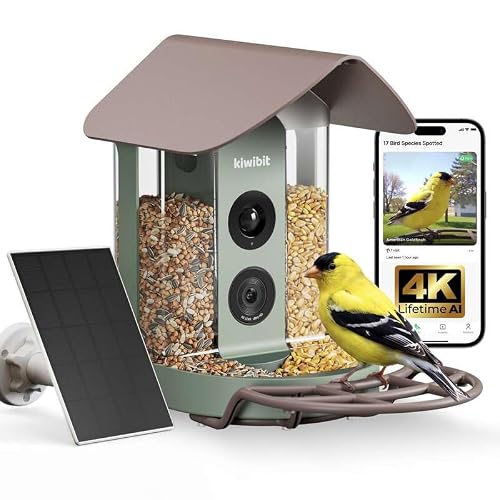
4K, 8MP, a stated 5,200mAh cell and a stated 3W panel, with an IP65 rating and a real temperature range. Then it claims 10,000+ species.
Kiwibit publishes more of its own numbers than anyone else here, and the ones it publishes are good: a 5,200mAh cell, a 3W adjustable panel, IP65, and an operating range of -4F to 122F. That last figure is 18 degrees colder at the bottom than Birdfy's, which is the difference between a camera that works through a Minnesota February and one that does not.
This is also the brand formerly sold as Beako. If you have read a review of a Beako feeder, you have read a review of this. The rename is why searches for the old name land here.
And then there is the 10,000+ figure. There are 11,227 bird species in the world by the current IOC list and 1,161 in the entire ABA Area. A claim of 10,000+ on a device pointed at a six-inch perch in North America is a claim about a training set, not about your backyard. It is not a lie, but it is not information either - here is what the number can honestly mean.
What it does well
- Publishes battery, panel wattage, ingress rating and temperature range - unusually complete
- -4F to 122F is the widest published operating range on this page
- 4K and 8MP stills give genuine cropping room
- Free live view, playback and motion alerts per the maker's listing
What it does not
- The 10,000+ species claim is 8.6x the entire ABA Area list
- Sensor size is not published, so the 8MP figure has no context
- The Beako rename means older reviews are filed under a brand name that no longer exists
Skip this: if the species number is what sold you on it. Buy it for the battery, the panel and the temperature range, which are real published figures you can hold the maker to.
4. Two seed types, and the only published retail price here
FeatherSnap Scout
Dual 1L bins let you run sunflower and nyjer at once, which changes what turns up. FeatherSnap is also the only maker in this roundup that publishes its own price.
The dual bin is the reason to buy this one. Sunflower brings cardinals and chickadees; nyjer brings finches. A single-chamber feeder makes you choose which half of your yard's birds you photograph. Two chambers means you stop choosing, and the variety in the camera roll goes up immediately.
1080p and 4MP are the lowest capture figures in this roundup, and it is worth being clear about what that costs you: you cannot crop hard. For a full-frame shot of a bird on a perch it is entirely adequate. For a portrait of a goldfinch's head, it is not.
FeatherSnap is 2.4GHz, per its own listing. Same caveat as most of this category, same ten-minute fix - see the Wi-Fi guide.
One thing genuinely worth crediting: FeatherSnap publishes a price on its own website. Almost nobody in this category does, which is a small thing that says something.
What it does well
- Two independent 1L seed chambers - the only feeder here that can run two seed types
- Pole, strap and wall mount all included, so there is no second purchase
- 170 degree lens catches birds arriving at the edge of the tray
- The maker publishes its own retail price, which almost none of its rivals do
What it does not
- 1080p video and 4MP stills are the lowest capture figures in this roundup
- AI identification is behind the Premium tier, whose price is not published
- 2.4GHz only
Skip this: if you want to crop in hard on individual birds. 4MP does not give you the pixels, and the Kiwibit at 8MP or a 4K model will.
The four things that actually decide this
1. The Wi-Fi band, which is the one that ruins purchases
Nearly every camera in this category is 2.4GHz only. That is not a defect - 2.4GHz travels further through walls and across a yard than 5GHz does, which is exactly what a feeder forty feet from the house needs. The problem is the modern router. Most mesh systems and most carrier-supplied routers ship with both bands published under a single network name, and a 2.4GHz-only device frequently cannot join that network at all without the 5GHz radio being temporarily switched off.
This is the single most common reason a feeder camera goes back to the retailer, and it is a router configuration problem rather than a product fault. It is also fixable in about ten minutes if you know it is coming. The Wi-Fi requirements guide covers what to check before you order and what to change if the pairing fails.
One model in this roundup will join a 5GHz network: the Birdfy 4K Full-Metal, which publishes dual-band support. Everything else here is 2.4GHz. A small number of newer brands now publish dual-band too - they are collected in the 5GHz roundup.
2. The subscription, which is where the real price is
The number on the product page is not what the camera costs. Most makers put species identification, cloud video history, or both behind a recurring plan, and most of them do not publish the price of that plan anywhere on the listing you buy from. A feeder that is cheaper on day one is routinely more expensive by month eighteen.
We treat the plan as part of the purchase price and say so on every pick. Where a maker declines to publish the plan price, we print that it declined rather than guessing a figure. The three-year cost guide shows the arithmetic.
3. Power, which is really a question about your trees
Solar roofs are the default now, and they work - in direct sun. A solar feeder under a mature oak is a battery feeder you have to take down and charge, and it will be worse at it than a model designed for the job, because the solar version usually carries the smaller cell. Makers used to sell the identical camera in both a solar and a non-solar trim precisely because of this, and those trims have now been discontinued. So a shaded feeder site is a charging decision rather than a buying one: expect to bring the camera in, or choose a model whose panels can face somewhere the sun actually reaches.
4. The picture, which matters less than the listing implies
Resolution is the number every maker prints and the number that tells you least. A 4K sensor behind a small lens, cropped to a perch eight inches away and compressed for upload over 2.4GHz, does not deliver four times the useful detail of a 2K sensor. Sensor size and dynamic range matter more for a subject that is backlit against a bright sky, which is what a bird on a feeder almost always is - and exactly one maker in this category publishes a sensor dimension at all.
The species-count claim, briefly
Two makers on this page claim their app identifies more than 10,000 species. For scale: the IOC World Bird List, the reference checklist used internationally, recognizes 11,227 species of which 164 are extinct. A claim of 10,000+ is therefore a claim of near-total coverage of every living bird species on the planet.
Meanwhile the American Birding Association checklist for the entire ABA Area - the whole of North America north of Mexico - runs to 1,161 species, and a typical backyard feeder in the United States sees somewhere in the range of twenty to sixty over a year. The species count is not a lie, exactly. It is a number describing a problem you do not have. The AI identification guide works through what the claim can and cannot mean.
Everything in this hub
Six roundups, nine model reviews and four head-to-heads sit under this page. If you are comparing two specific models, the head-to-heads are the fastest route: Birdbuddy against Birdfy is the comparison most people arrive looking for, Birdbuddy against Kiwibit is the one that gets closest to a genuine disagreement about value, and Birdbuddy against FeatherSnap is the one where the two makers have built genuinely different products rather than two versions of the same one.
If you already own a feeder you like, feeder camera versus trail camera covers whether a cheap trail camera pointed at it would do the job instead - sometimes it genuinely will. If your router has ever defeated a smart-home device, start with the dual-band roundup: nearly everything in this category is 2.4GHz-only, and the handful of cameras that publish 5GHz support are collected there. At the cheap end, the HARYMOR review covers a sub-$100 feeder that publishes its 2L hopper capacity - unusual in a bracket where listings go quiet - and the four specifications it leaves blank. Three of the model reviews cover the picks that win on something other than the specification sheet. The Kiwibit no-subscription edition is the best-value billing arrangement in the category and the one to read the wording on. The SOLIOM metal feeder camera is the cheapest metal body here, and its maker is one of the very few in the category that publishes what its cloud plan costs. And the Birdfy Bamboo is the only one you would actually want to look at, which is a more legitimate purchase criterion than people admit.
Once the feeder is chosen, what to buy alongside it covers the mount, the seed and the two accessories that change your photographs - half of these cameras arrive with no way to attach them to anything.
There is also an option the whole category declines to mention: do not replace the feeder at all. Birds take days to weeks to accept a new one, so if yours is already busy, a camera you add to the feeder you already own keeps the station they trust and costs a third of an all-in-one. At the cheap end of the all-in-ones, the BirdSnap review covers the best-documented feeder under $100 here - six published figures including an IP65 rating and a named Wi-Fi band - and the HEAPETS review is the instructive counter-example one tier below it, where a weather rating becomes an adjective.
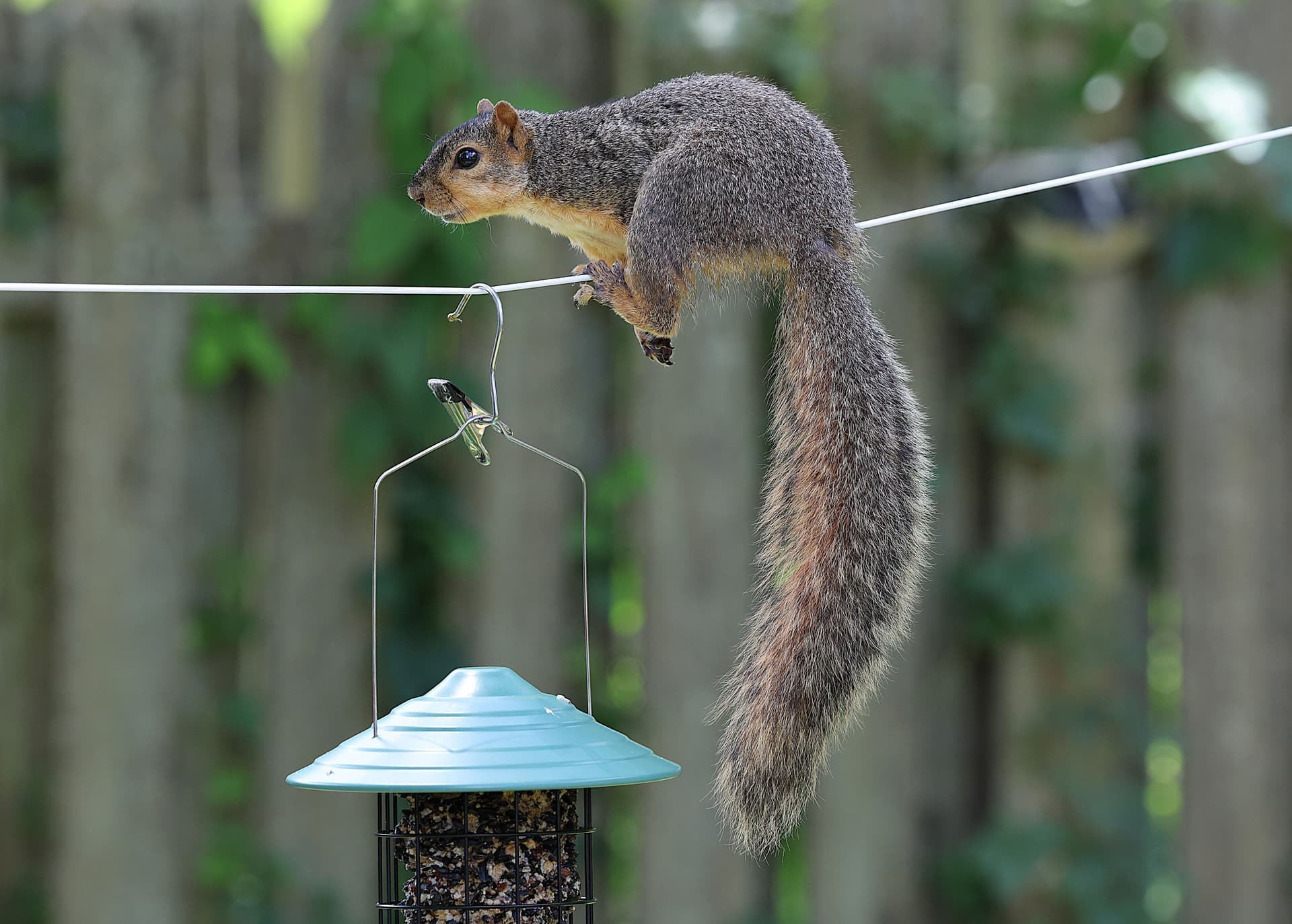
And one question this hub spent a year answering backwards: can a bird feeder camera watch squirrels? It can, the identification fails because it was trained on birds, and there is a whole small category of camera feeders built for the animal instead - which is a better answer than ruining your bird footage.
Buying for somebody specific, or somewhere specific? Three of the roundups here rank on criteria the flagship list deliberately ignores: for seniors weights setup difficulty and surprise billing over optics, and for cold weather weights ingress rating and hopper size, because winter is when a feeder camera works hardest on the least power. If you are weighing the premium brand against the rest, is Birdbuddy worth it runs the arithmetic honestly.
And two more head-to-heads sit here for the cross-shops people actually make: Birdfy against FeatherSnap, which comes down to a specification sheet against two seed chambers, and Birdfy against Happy Birdy, which is documentation and track record against a published IP67 rating and free identification. Two narrower cuts of the same field: the 4K roundup for buyers set on the resolution badge, and window-mounted feeders for anyone without a yard to put a pole in. Whichever camera you end up with, the seed you put in it changes your footage more cheaply than any of them - and suet is the second food, the one that brings the woodpeckers a seed hopper never will. If you started at Birdbuddy and are wondering what else exists, the alternatives page sorts the field by the three reasons people actually leave.
Questions people actually ask
Do I need a subscription to use a smart bird feeder?
To record video and get photographs, generally no. To have the app tell you which species just landed, usually yes - identification is the feature most commonly held behind a paid tier. Two models on this site claim no subscription at all; they are collected in the no-subscription roundup.
Will a bird feeder camera work on my Wi-Fi?
Only if it can reach a 2.4GHz network. Almost every model in the category is 2.4GHz-only, and a combined-band network published under one name is the usual reason pairing fails. The Wi-Fi guide covers what to check first.
How far from the house can the feeder be?
That is a question about your router rather than the camera. 2.4GHz carries further than 5GHz, but through exterior walls and across a yard the practical limit is usually well short of what the router's coverage map suggests. If the feeder site is at the far end of the garden, plan on an access point or a mesh node nearer to it.
Do the cameras scare the birds?
The camera itself is silent and does not flash. What changes behavior is you - putting up a new feeder anywhere takes days to weeks to be found and trusted, whether or not there is a camera in it. This guide covers what the evidence supports.
Which one takes the best pictures?
On published specifications, the Birdbuddy Pro Solar: it is the only model in the category that publishes a sensor dimension, and a larger sensor matters more than resolution for a backlit subject. That is a statement about the specification sheet, not about photographs we have taken.
Sources
- IOC World Bird List v15.2 (13 April 2026), International Ornithologists' Union
- ABA Checklist v8.19 (January 2026), American Birding Association
- Birdbuddy support: Connectivity and Wi-Fi requirements
- Wi-Fi Alliance: Wi-Fi CERTIFIED programs and frequency bands
- Project FeederWatch, Cornell Lab of Ornithology