Bird Camera Gifts
Gifts for Bird Watchers
The harder brief: someone who already has the feeders, knows their birds, and will politely accept anything. What actually adds something, and the one gift to avoid.
How this page is funded. Buying through a link here earns us a commission at no extra cost to you. It does not change what we recommend or the order we recommend it in, and we have not handled any of these products ourselves - see how we pick and the full disclosure.
Buying for someone who is already into birds is harder than buying for a beginner, for the obvious reason: they have the obvious things, and they know more about them than you do. A seed feeder camera is a poor gift for this person, because either they already have one or they have decided not to.
The trick is to give them a different subject rather than a better version of the one they have.
The principle: change the subject, not the specification
A second seed feeder camera shows them the same chickadees at higher resolution. A bird bath camera shows them warblers - species that will never touch a feeder and that they may have watched pass through their yard for years without being able to get near. That is a genuinely new thing, and it is the strongest gift on this page.
The same logic runs down the list: a hummingbird camera, a nest box camera. Each opens a subject a feeder cannot reach, which is what makes them interesting to somebody who has exhausted the feeder.
Quick picks
Ranked on published specifications and what each one costs to own. Every pick names the buyer it is wrong for.
| # | Product | Best for | Price |
|---|---|---|---|
| 1 |  Birdfy Smart Bird Bath (dual-lens, solar, fountain) Dual-lens 2K with auto-tracking, a solar fountain and lifetime AI recognition. Bathing birds behave completely differently to feeding ones. | The best bird bath camera there is, mostly by default | |
| 2 |  Star&Mi Integrated-Roof Hummingbird Camera 2.5K with color night vision and an integrated solar roof, in the slot the discontinued Birdbuddy hummingbird feeder used to hold. | The highest published resolution on a nectar feeder you can actually buy | |
| 3 | 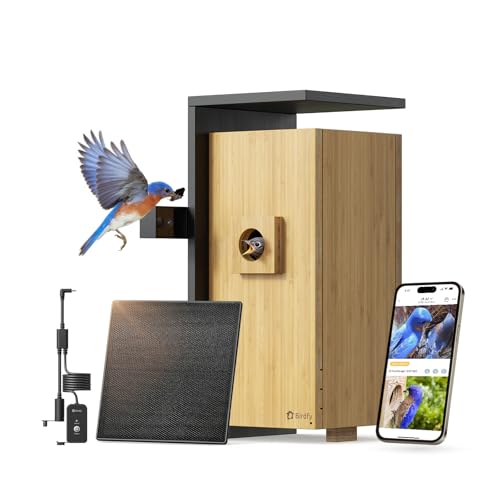 Netvue Birdfy Nest (dual-cam) Two 1080p cameras - one in the nest chamber, one on the entrance - with a 60 degree adjustable angle and identification paid for up front. This is the whole nesting season. | Inside the box and outside it, at once | $279.99 - View on Amazon #ad Price checked October 17, 2026. How this is funded |
| 4 | 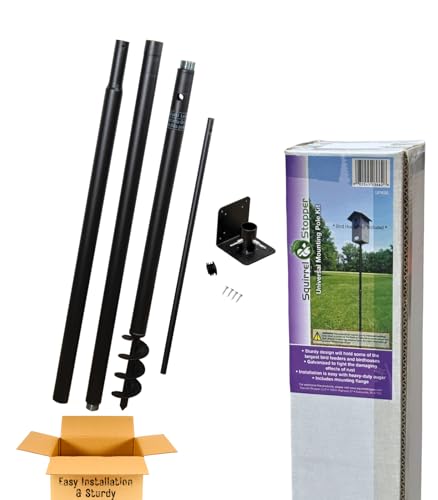 Squirrel Stopper Universal Mounting Pole Kit 55 inches of steel rated to 30 lb with threaded connections and top or side mounting. The only pole here that states what it can hold. | A published load rating, which almost nothing else has | $60.96 - View on Amazon #ad Price checked October 17, 2026. How this is funded |
| 5 |  Birdbuddy Pro Solar The largest published sensor in the category and the only maker that declines to advertise a species count - both of which point the same way. | The best pictures, if you can live with the app |
1. The best bird bath camera there is, mostly by default
Birdfy Smart Bird Bath (dual-lens, solar, fountain)
Dual-lens 2K with auto-tracking, a solar fountain and lifetime AI recognition. Bathing birds behave completely differently to feeding ones.
Water pulls in birds that will never touch a seed feeder. Warblers, thrushes, waxwings - insect and fruit eaters that have no reason to visit a hopper of sunflower seed - all need to drink and bathe. If your feeder camera has shown you the same six species since March, a bath is the single fastest way to change that. It is the argument bath versus feeder camera makes at length.
The moving water is doing as much work as the camera. Birds find water by sound as much as by sight, and a still dish is close to invisible from the air. The three nozzles let you tune how loud it is.
What is not published: water capacity, battery capacity, Wi-Fi band. Water depth is the specification that actually governs which species will use a bath, and nobody publishes it - so measure it yourself, and keep it under about an inch at the shallow edge.
| Camera system | Dual lens, wide plus auto-tracking, 2KSource: Birdfy Bath - manufacturer listing on Amazon, retrieved 1 September 2026 |
|---|---|
| Fountain | Solar-powered, three interchangeable nozzlesSource: Birdfy Bath - manufacturer listing on Amazon, retrieved 1 September 2026 |
| Power | Built-in rechargeable battery with integrated solar panelSource: Birdfy Bath - manufacturer listing on Amazon, retrieved 1 September 2026 |
| AI | Lifetime AI bird recognition stated on the listingSource: Birdfy Bath - manufacturer listing on Amazon, retrieved 1 September 2026 |
| Water capacity | Not published |
| Battery capacity | Not published |
| Wi-Fi band | Not published |
What it does well
- Dual-lens 2K with auto-tracking on a genuinely difficult subject
- Solar fountain with three nozzles - moving water is what brings birds in
- Lifetime AI recognition stated on the listing, no subscription
- Reaches species a seed feeder never will
What it does not
- Water capacity and depth are not published, and depth is what decides which birds use it
- No published battery capacity or Wi-Fi band
- A bath needs emptying and scrubbing far more often than a feeder needs filling
Skip this: if you are not going to clean it. A bird bath is a shared water source, and a dirty one spreads disease through the exact population you are trying to attract. If a weekly scrub is not happening, buy a feeder.
2. The highest published resolution on a nectar feeder you can actually buy
Star&Mi Integrated-Roof Hummingbird Camera
2.5K with color night vision and an integrated solar roof, in the slot the discontinued Birdbuddy hummingbird feeder used to hold.
This slot used to hold the Birdbuddy solar hummingbird feeder, which is discontinued. Birdbuddy published a sensor dimension, and with it gone no hummingbird camera on this site publishes one - which makes every resolution claim in this hub harder to judge than it was.
Hummingbirds are the hardest subject in this category. A ruby-throated hummingbird beats its wings roughly fifty times a second and rarely holds still for a full second, and the specification that decides whether you get a shaped wing is frame rate. Nobody publishes it, so 2.5K is the most you can buy on and it is not the figure that matters.
The integrated solar roof is the practical standout. Nectar feeders hang on shaded porches, so a panel does its least work exactly where the feeder belongs - but no wires on a porch-mounted device is a genuine convenience, and the leakproof claim matters because dripping sugar water brings ants.
| Video resolution | 2.5K HDSource: Star&Mi Hummingbird Camera - manufacturer listing on Amazon, retrieved 1 September 2026 |
|---|---|
| Night vision | Color night visionOf limited use on hummingbirds, which are strictly daytime feeders - but it covers dawn and dusk, when nectar traffic is heaviest.Source: Star&Mi Hummingbird Camera - manufacturer listing on Amazon, retrieved 1 September 2026 |
| Power | All-in-one integrated solar roof, no wiresSource: Star&Mi Hummingbird Camera - manufacturer listing on Amazon, retrieved 1 September 2026 |
| Leak protection | Leakproof design claimedWorth more on a nectar feeder than it sounds: sugar water that drips recruits ants and wasps.Source: Star&Mi Hummingbird Camera - manufacturer listing on Amazon, retrieved 1 September 2026 |
| Species identification | AI identification claimedClaimed without a species count.Source: Star&Mi Hummingbird Camera - manufacturer listing on Amazon, retrieved 1 September 2026 |
| Sensor size | Not publishedNo hummingbird camera on this site publishes one any more. The discontinued Birdbuddy was the only maker that ever did. |
| Frame rate | Not publishedThe figure that actually decides whether a beating wing is a shape or a smear. Nobody in this category publishes it. |
| Nectar capacity | Not published |
| Wi-Fi band | Not published |
| Subscription | Not published |
What it does well
- Highest published resolution of any nectar camera we can currently buy
- Integrated solar roof with no wiring to run to a porch
- Publishes a leakproof claim, which most nectar cameras do not address
What it does not
- No published sensor size, so the 2.5K figure has no context
- No published frame rate - the one specification that decides hummingbird footage
- No published nectar capacity, Wi-Fi band or subscription position
- Unestablished brand with no track record in bird cameras
Skip this: if you want more feeding positions in a single frame. The Birdfy Hummee uses a two-in-one feeder body to spread visiting birds across one view, which on a busy multi-port feeder records more of the visits.
3. Inside the box and outside it, at once
Netvue Birdfy Nest (dual-cam)
Two 1080p cameras - one in the nest chamber, one on the entrance - with a 60 degree adjustable angle and identification paid for up front. This is the whole nesting season.
#ad Price checked October 17, 2026. How this is funded
A nest box camera is a completely different proposition to a feeder camera and it is worth understanding before you buy. A feeder gives you a hundred short visits a day. A nest box gives you nothing for weeks, then one continuous story - building, laying, hatching, fledging - that runs for about six weeks and does not repeat until next year. See what you actually see in a nest box.
The second camera is the whole product. The interior lens gives you the nest itself; the entrance lens gives you the arrivals, the fledging morning and - the part nobody warns you about - any competitor trying to take the box. One camera gives you half the story.
What is not published is the entrance hole diameter, and that is the specification that decides everything. Hole size is what selects your tenant - and gets it wrong. Hole size by species has the numbers; measure the box when it arrives.
| Cameras | Two: one inside the chamber, one facing the entranceSource: Birdfy Nest dual-cam - manufacturer listing on Amazon, retrieved 1 September 2026 |
|---|---|
| Video resolution | Dual 1080PSource: Birdfy Nest dual-cam - manufacturer listing on Amazon, retrieved 1 September 2026 |
| AI identification | Lifetime free AI bird ID stated on the listingBirdfy moved this line onto lifetime identification; it was previously sold with an optional recurring plan.Source: Birdfy Nest dual-cam - manufacturer listing on Amazon, retrieved 1 September 2026 |
| Camera angle | 60 degrees adjustable on bothSource: Birdfy Nest dual-cam - manufacturer listing on Amazon, retrieved 1 September 2026 |
| Audio | Built-inSource: Birdfy Nest dual-cam - manufacturer listing on Amazon, retrieved 1 September 2026 |
| Night vision | Not publishedNot stated on the current listing. |
| Solar | Not publishedNot stated on the current listing. |
| Entrance hole diameter | Not publishedThis is the specification that decides which species can use the box. |
| Battery capacity | Not published |
What it does well
- Two cameras cover the chamber and the entrance simultaneously
- Lifetime AI identification stated on the listing - nothing recurring
- Built-in audio - nestlings are far louder than people expect
- 60 degree adjustable angle on both cameras
What it does not
- Entrance hole diameter is not published, and it decides which species can nest
- 1080p on both cameras, with no higher option
- Night vision and solar are not stated on the current listing
- A nest box is empty most of the year
Skip this: if you want something to watch year-round. A nest box is spectacular for six weeks and inert for the other forty-six; a feeder camera is the opposite trade.
4. A published load rating, which almost nothing else has
Squirrel Stopper Universal Mounting Pole Kit
55 inches of steel rated to 30 lb with threaded connections and top or side mounting. The only pole here that states what it can hold.
#ad Price checked October 17, 2026. How this is funded
A 30 lb rating is enormous for this job and that is the point. A full metal feeder with a wet camera on top, taking a gust across an open lawn, puts more load on a pole than people expect - and a pole that flexes ruins every photograph it takes.
Threaded connections rather than friction-fit sections is the other quiet advantage. Friction joints work loose over a season; threads do not.
It is a fixed 55 inches, so decide your height before you dig. If you want to experiment, the adjustable pole is the trade.
| Load rating | Holds up to 30 lbThe only published load figure among the poles here.Source: Squirrel Stopper pole kit - manufacturer listing on Amazon, retrieved 1 September 2026 |
|---|---|
| Height | 55 inchesSource: Squirrel Stopper pole kit - manufacturer listing on Amazon, retrieved 1 September 2026 |
| Material | Heavy-duty steel, rust resistantSource: Squirrel Stopper pole kit - manufacturer listing on Amazon, retrieved 1 September 2026 |
| Mounting | Threaded connections, top or side mountSource: Squirrel Stopper pole kit - manufacturer listing on Amazon, retrieved 1 September 2026 |
| Adjustability | Not publishedFixed height rather than telescoping. |
What it does well
- Published 30 lb load rating - the only pole here that states one
- Threaded connections that will not work loose
- Top or side mounting suits feeders and boxes alike
- Rust-resistant steel
What it does not
- Fixed height, no adjustment after installation
- 55 inches is short if squirrels are jumping from a fence
- Heavier to install than a telescoping pole
Skip this: if you have not settled on a spot. Fixed height plus a driven base is a commitment, and an adjustable pole is the better first purchase.
5. The best pictures, if you can live with the app
Birdbuddy Pro Solar
The largest published sensor in the category and the only maker that declines to advertise a species count - both of which point the same way.
A 1/2.7" sensor is a real, checkable number, and it is bigger than anything else in this category will admit to. Sensor area is what governs how a photo looks when a bird lands at dusk, which is when most feeder traffic actually happens. Nobody else publishes the figure, so nobody else can be compared to it.
The thing worth noticing is what is missing. Every rival leads with an AI number - 6,000 species, 10,000 species. Birdbuddy prints none. A maker that does not put a number on its recognition claim is a maker with nothing to walk back, and after you read the species-claim audit that reads as confidence rather than as a gap.
The Wi-Fi position is the one to check before you buy. Birdbuddy's own support documentation says the original camera module requires 2.4GHz and does not work on 5GHz. If your router broadcasts one merged network name, that is the setup that fails - and the fix takes ten minutes once you know about it. It is covered in the Wi-Fi requirements guide.
| Video resolution | 2KSource: Birdbuddy Pro Solar - manufacturer listing on Amazon, retrieved 1 September 2026 |
|---|---|
| Photo resolution | 5MPSource: Birdbuddy Pro Solar - manufacturer listing on Amazon, retrieved 1 September 2026 |
| Sensor size | 1/2.7"The only sensor dimension published by any maker in this roundup.Source: Birdbuddy Pro Solar - manufacturer listing on Amazon, retrieved 1 September 2026 |
| Dynamic range | HDRSource: Birdbuddy Pro Solar - manufacturer listing on Amazon, retrieved 1 September 2026 |
| Wi-Fi band | 2.4GHz for the original camera module; the Birdbuddy 2 module adds 5GHzBirdbuddy's own support pages state the original module does not work on 5GHz.Source: Birdbuddy support: Connectivity and Wi-Fi requirements |
| Solar | Detachable solar roof, rotates 180 degreesSource: Birdbuddy Pro Solar - manufacturer listing on Amazon, retrieved 1 September 2026 |
| Battery capacity | Not publishedNo mAh figure appears on the listing or the support site. |
| Species identified | Not publishedBirdbuddy publishes no species count anywhere we could find. See the AI claims audit. |
| Subscription price | Not publishedNot stated on the listing, and the plan page did not serve us a price. |
What it does well
- Published 1/2.7" sensor with HDR - the only sensor dimension anyone in the category states
- Solar roof detaches and rotates, so the panel can face the sun even when the feeder cannot
- Makes no species-count claim, which is the honest position given the arithmetic
- The largest accessory ecosystem in the category, including perch extenders and nutrition sets
What it does not
- Battery capacity is not published, so runtime cannot be estimated from first principles
- The original camera module is 2.4GHz-only per Birdbuddy's own support pages
- Subscription pricing is not stated on the listing and was not retrievable from the plan page
Skip this: if you want every feature unlocked with no ongoing decision to make. Birdbuddy's premium tier exists, its price is not published where a buyer can find it, and buying into an unpriced subscription is exactly the trap the three-year cost guide was written about.
Why the bird bath ranks first
Because of what drinks. Every bird drinks and bathes; only granivores eat seed. A bath brings in thrushes, warblers, vireos, orioles and catbirds - the birds a keen watcher knows are around and rarely gets a close look at, particularly during spring migration.
For someone who has watched their feeder for three years and knows every regular by sight, that is a new category of thing to see. The bird bath hub makes the argument in full.
The nest box, with a warning
Potentially the best gift here and the riskiest. The footage is unmatched - nest building, eggs, hatching, fledging - and it may film nothing at all in its first year. The hub is candid about this.
So it is the right present for someone patient who will enjoy installing it in autumn and waiting for spring, and the wrong one for someone expecting the gift to do something in January. You will know which you are buying for.
The unglamorous one that gets used
A good pole. Nobody buys themselves a decent pole - they buy the feeder, hang it somewhere convenient, and then fight squirrels and Wi-Fi dropouts for a year. A proper pole with a published load rating solves both, and it is a present that quietly improves everything they already own. The full case is here.
The one thing not to give them
Binoculars. This looks like the obvious gift for a bird watcher and it is a trap. Anyone serious already has a pair chosen carefully for their eyes, their hands and their budget, and optics are intensely personal - magnification, eye relief, weight and glasses compatibility are all individual. A replacement pair is very likely worse than the ones they own and impossible to decline gracefully.
If they genuinely need optics, give a gift card and let them choose. That is not a cop-out; it is the correct answer for this specific product.
And the free one
If they do not already know about Project FeederWatch or Merlin - the Cornell Lab's citizen-science project and its free identification app respectively - mention them. Both are excellent, neither costs anything, and a keen feeder-watcher often finds contributing their observations more satisfying than any device. It is not a gift you can wrap, and it may be the most welcome thing on this page.
Questions people actually ask
What do you buy a bird watcher who has everything?
Something that changes the subject rather than upgrading it - a bird bath camera, a hummingbird camera or a nest box camera shows them birds a seed feeder never will.
Should I buy binoculars for a bird watcher?
No. Anyone serious already has a pair matched to their eyes, hands and budget, and optics are too personal to guess at. A gift card is the better answer.
Is a bird bath camera a good gift?
The best on this list for an established feeder-watcher. Water brings in warblers, thrushes and orioles - species they know are around and rarely see closely.
What about a nest box camera?
Extraordinary footage when it works, and possibly nothing at all in year one. Right for a patient recipient who will install it in autumn; wrong for someone expecting immediate results.
What is a good cheap gift for a birder?
A proper feeder pole with a baffle. Nobody buys themselves one, and it quietly fixes squirrels, camera angle and Wi-Fi signal on the feeder they already own.
Sources
- Project FeederWatch, Cornell Lab of Ornithology
- Merlin Bird ID, Cornell Lab of Ornithology
- Audubon: how to feed birds and keep feeders clean
- Birdfy Smart Bird Bath - manufacturer listing on Amazon, retrieved 1 September 2026
- Squirrel Stopper Universal Mounting Pole Kit - manufacturer listing on Amazon, retrieved 1 September 2026