Smart Bird House Cameras
Installing a Bird House Camera
You get one attempt per season, because an occupied box cannot be touched. Everything that has to be right before the birds arrive.
How this page is funded. Buying through a link here earns us a commission at no extra cost to you. It does not change what we recommend or the order we recommend it in, and we have not handled any of these products ourselves - see how we pick and the full disclosure.
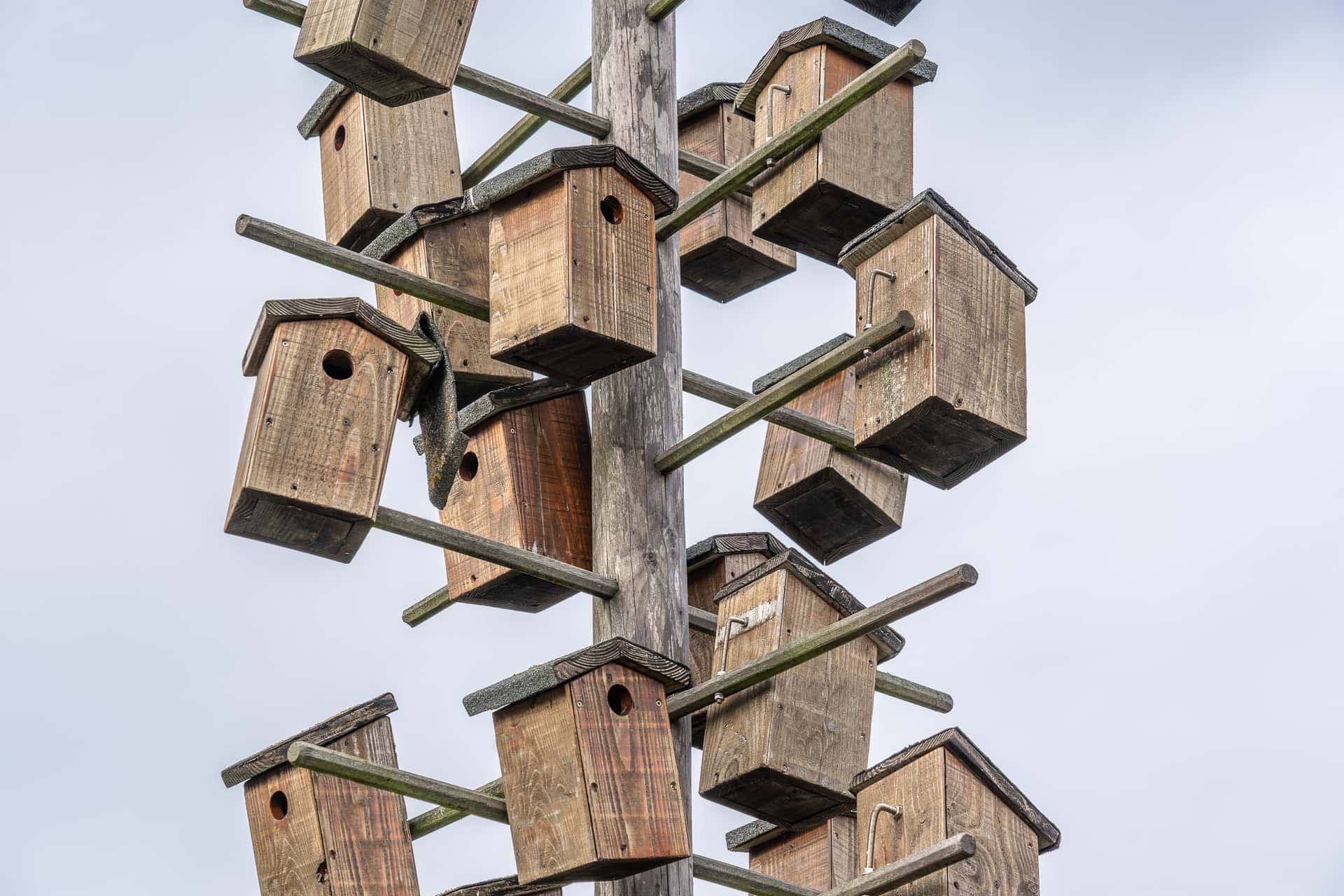
A feeder camera can be moved on a whim. A nest box camera cannot - once a nest is active, opening the box is both harmful and, for native migratory birds in the United States, illegal. Everything has to be right before anything moves in, and if you get it wrong you find out in April and fix it the following autumn.
Timing, which is the highest-impact decision
Install in autumn or winter for the following spring. This single choice does more for your odds than anything else on this page, and it costs nothing.
Birds prospect for nest sites well ahead of laying - inspecting cavities, returning to them, deciding. A box that appears in March, when you have got excited about the idea, has missed most of that process. A box that has been standing since October is part of the landscape by the time the decision is made.
It also gives you a winter to discover problems - a leaking roof, a bad camera angle, a mount that moves in wind - while the box is still empty and you can still fix them.
The installation, in order
Getting it right the first time
- 1
Choose the species, then check the hole
Entrance diameter decides which birds can use the box and which competitors can evict them. Do this before anything else - see nest box hole sizes.
- 2
Mount on a pole, not a tree
A tree trunk is a highway for raccoons, snakes and squirrels. A smooth metal pole with a baffle beneath the box is far safer, and it is the main thing that decides whether a brood survives. The poles in this roundup do the same job here.
- 3
Fit a predator baffle below the box
A cone or stovepipe baffle on the pole. Without one, a pole is merely a thinner tree - the baffle is what makes the mounting choice worth anything.
- 4
Set the height at about five to six feet
High enough to deter ground predators, low enough that you can reach it to clean between broods. Higher is not better, and it makes maintenance a ladder job.
- 5
Face the entrance away from prevailing weather
In most of North America that means facing east or south-east: away from prevailing wind and driven rain, and catching morning sun without the full afternoon heat.
- 6
Check the camera angle and the Wi-Fi from that exact spot
Confirm the interior lens covers the nest cup, not the wall, and check the signal where the box will actually stand. Both are trivial now and impossible in May.
- 7
Clear the approach, and check for cover nearby
Birds want a clear flight path to the entrance and somewhere to perch and watch from a few yards away. A box tight against dense foliage gets used less.
Quick picks
Ranked on published specifications and what each one costs to own. Every pick names the buyer it is wrong for.
| # | Product | Best for | Price |
|---|---|---|---|
| 1 | 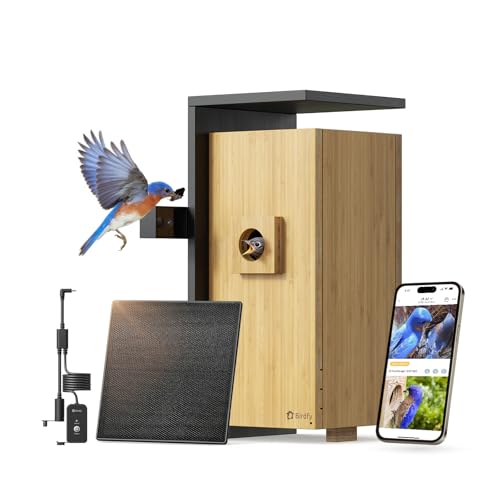 Netvue Birdfy Nest (dual-cam) Two 1080p cameras - one in the nest chamber, one on the entrance - with a 60 degree adjustable angle and identification paid for up front. This is the whole nesting season. | Inside the box and outside it, at once | $279.99 - View on Amazon #ad Price checked October 17, 2026. How this is funded |
| 2 | 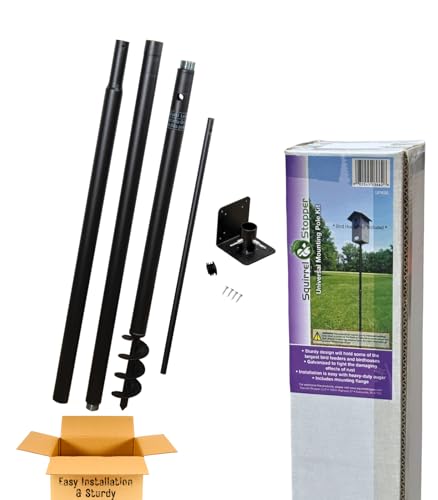 Squirrel Stopper Universal Mounting Pole Kit 55 inches of steel rated to 30 lb with threaded connections and top or side mounting. The only pole here that states what it can hold. | A published load rating, which almost nothing else has | $60.96 - View on Amazon #ad Price checked October 17, 2026. How this is funded |
| 3 |  Birdfy Smart Bird House (Lifetime AI) Auto-records the nesting stages and flags them, with lifetime AI and a remote control so you never have to open the box. | Nesting-stage alerts, paid once | $239.99 - View on Amazon #ad Price checked October 17, 2026. How this is funded |
1. Inside the box and outside it, at once
Netvue Birdfy Nest (dual-cam)
Two 1080p cameras - one in the nest chamber, one on the entrance - with a 60 degree adjustable angle and identification paid for up front. This is the whole nesting season.
#ad Price checked October 17, 2026. How this is funded
A nest box camera is a completely different proposition to a feeder camera and it is worth understanding before you buy. A feeder gives you a hundred short visits a day. A nest box gives you nothing for weeks, then one continuous story - building, laying, hatching, fledging - that runs for about six weeks and does not repeat until next year. See what you actually see in a nest box.
The second camera is the whole product. The interior lens gives you the nest itself; the entrance lens gives you the arrivals, the fledging morning and - the part nobody warns you about - any competitor trying to take the box. One camera gives you half the story.
What is not published is the entrance hole diameter, and that is the specification that decides everything. Hole size is what selects your tenant - and gets it wrong. Hole size by species has the numbers; measure the box when it arrives.
| Cameras | Two: one inside the chamber, one facing the entranceSource: Birdfy Nest dual-cam - manufacturer listing on Amazon, retrieved 1 September 2026 |
|---|---|
| Video resolution | Dual 1080PSource: Birdfy Nest dual-cam - manufacturer listing on Amazon, retrieved 1 September 2026 |
| AI identification | Lifetime free AI bird ID stated on the listingBirdfy moved this line onto lifetime identification; it was previously sold with an optional recurring plan.Source: Birdfy Nest dual-cam - manufacturer listing on Amazon, retrieved 1 September 2026 |
| Camera angle | 60 degrees adjustable on bothSource: Birdfy Nest dual-cam - manufacturer listing on Amazon, retrieved 1 September 2026 |
| Audio | Built-inSource: Birdfy Nest dual-cam - manufacturer listing on Amazon, retrieved 1 September 2026 |
| Night vision | Not publishedNot stated on the current listing. |
| Solar | Not publishedNot stated on the current listing. |
| Entrance hole diameter | Not publishedThis is the specification that decides which species can use the box. |
| Battery capacity | Not published |
What it does well
- Two cameras cover the chamber and the entrance simultaneously
- Lifetime AI identification stated on the listing - nothing recurring
- Built-in audio - nestlings are far louder than people expect
- 60 degree adjustable angle on both cameras
What it does not
- Entrance hole diameter is not published, and it decides which species can nest
- 1080p on both cameras, with no higher option
- Night vision and solar are not stated on the current listing
- A nest box is empty most of the year
Skip this: if you want something to watch year-round. A nest box is spectacular for six weeks and inert for the other forty-six; a feeder camera is the opposite trade.
2. A published load rating, which almost nothing else has
Squirrel Stopper Universal Mounting Pole Kit
55 inches of steel rated to 30 lb with threaded connections and top or side mounting. The only pole here that states what it can hold.
#ad Price checked October 17, 2026. How this is funded
A 30 lb rating is enormous for this job and that is the point. A full metal feeder with a wet camera on top, taking a gust across an open lawn, puts more load on a pole than people expect - and a pole that flexes ruins every photograph it takes.
Threaded connections rather than friction-fit sections is the other quiet advantage. Friction joints work loose over a season; threads do not.
It is a fixed 55 inches, so decide your height before you dig. If you want to experiment, the adjustable pole is the trade.
| Load rating | Holds up to 30 lbThe only published load figure among the poles here.Source: Squirrel Stopper pole kit - manufacturer listing on Amazon, retrieved 1 September 2026 |
|---|---|
| Height | 55 inchesSource: Squirrel Stopper pole kit - manufacturer listing on Amazon, retrieved 1 September 2026 |
| Material | Heavy-duty steel, rust resistantSource: Squirrel Stopper pole kit - manufacturer listing on Amazon, retrieved 1 September 2026 |
| Mounting | Threaded connections, top or side mountSource: Squirrel Stopper pole kit - manufacturer listing on Amazon, retrieved 1 September 2026 |
| Adjustability | Not publishedFixed height rather than telescoping. |
What it does well
- Published 30 lb load rating - the only pole here that states one
- Threaded connections that will not work loose
- Top or side mounting suits feeders and boxes alike
- Rust-resistant steel
What it does not
- Fixed height, no adjustment after installation
- 55 inches is short if squirrels are jumping from a fence
- Heavier to install than a telescoping pole
Skip this: if you have not settled on a spot. Fixed height plus a driven base is a commitment, and an adjustable pole is the better first purchase.
3. Nesting-stage alerts, paid once
Birdfy Smart Bird House (Lifetime AI)
Auto-records the nesting stages and flags them, with lifetime AI and a remote control so you never have to open the box.
#ad Price checked October 17, 2026. How this is funded
Nesting-stage detection is the one AI feature in this whole category that is unambiguously worth having. You cannot watch a nest box continuously for six weeks, and the moments that matter - first egg, hatch day, fledging - last minutes. A system that flags them is the difference between seeing the season and missing it.
The remote control deserves more credit than it gets. Opening an occupied nest box can cause abandonment. Being able to change a setting from ten feet away means you never have to weigh a settings change against the birds.
Hole diameter is still unpublished. Same caveat as every box in this category: measure it, then read hole size by species.
| AI | Lifetime AI identification stated on the listingSource: Birdfy Bird House lifetime AI - manufacturer listing on Amazon, retrieved 1 September 2026 |
|---|---|
| Recording | Auto-records nesting stages with alertsSource: Birdfy Bird House lifetime AI - manufacturer listing on Amazon, retrieved 1 September 2026 |
| Night vision | YesSource: Birdfy Bird House lifetime AI - manufacturer listing on Amazon, retrieved 1 September 2026 |
| Power | Battery and solarSource: Birdfy Bird House lifetime AI - manufacturer listing on Amazon, retrieved 1 September 2026 |
| Control | Remote control, so the box is not openedSource: Birdfy Bird House lifetime AI - manufacturer listing on Amazon, retrieved 1 September 2026 |
| Entrance hole diameter | Not published |
| Battery capacity | Not published |
What it does well
- Nesting-stage alerts - the most genuinely useful AI feature in this category
- Remote control means the box never has to be opened once occupied
- Lifetime AI with no subscription
- Battery and solar
What it does not
- Entrance hole diameter not published
- No published battery capacity
- Nesting-stage detection is only exercised for a few weeks a year
Skip this: if you have not yet worked out which species you are trying to attract. Install timing and hole size decide whether anything moves in at all, and no camera compensates for an empty box.
Predator protection, which decides the outcome
The most common way a nest box story ends badly is predation, and the two mitigations that matter most are both about the mount rather than the box: a smooth pole, and a baffle below it.
A hole guard - a second thickness of wood or a metal plate around the entrance - is also worth having. It stops a raccoon or squirrel enlarging the hole to reach in, which is a real failure mode and one that turns a correctly-sized entrance into a wrong one mid-season.
Cleaning between broods
Once a brood has fledged and the box is genuinely empty, remove the old nest material. It harbors parasites that affect the next occupants, and a cleaned box may be reused the same season by a pair raising a second brood.
Be certain the box is empty before opening it. Fledging is quick and easy to miss, and the exterior camera on the dual-lens model is genuinely useful here - it shows you the parents stopping their visits, which is the clearest signal that the season is over.
If nothing nests
It is normal, particularly in year one, and it is not evidence that anything is wrong. Leave the box up, clean it in autumn, and wait. If a second season passes with nothing, reconsider the site rather than the box: too exposed, too close to a busy path, too far from cover, or the wrong hole size for the species that are actually present. The hub is candid about this being a feature of the product rather than a fault in your installation.
If the box is already up and already works
Then almost none of the above applies, and you are in a better position than anyone buying new. A box that has been occupied has already passed the only test that matters, and the job is to add a camera to it in October rather than to install anything. Bird box cameras covers the modules that retrofit an existing box and the one step of this procedure that still applies: measure the interior, check the signal from where the box stands, and aim at the nest cup rather than the wall.
Questions people actually ask
When should I put up a bird house camera?
Autumn or winter, for the following spring. Birds prospect for nest sites well before laying, so a box installed in March has usually missed that year's decision.
How high should a nest box be?
About five to six feet - high enough to deter ground predators and low enough that you can reach it to clean between broods. Higher is not better.
Which way should the entrance face?
Away from prevailing wind and rain, which in most of North America means east or south-east. That also catches morning sun while avoiding the worst afternoon heat.
Should I mount it on a tree?
Preferably not. A trunk is an easy climb for raccoons, squirrels and snakes. A smooth pole with a baffle below the box is substantially safer.
Can I clean the box while birds are in it?
No. Wait until the brood has fledged and the box is definitely empty. Disturbing an active nest of a native migratory bird is illegal in the United States as well as harmful.
Nothing nested in my box. What did I do wrong?
Possibly nothing - an empty first season is common. Leave it up, clean it in autumn and wait. If two seasons pass, look at the siting and the hole size rather than the camera.